
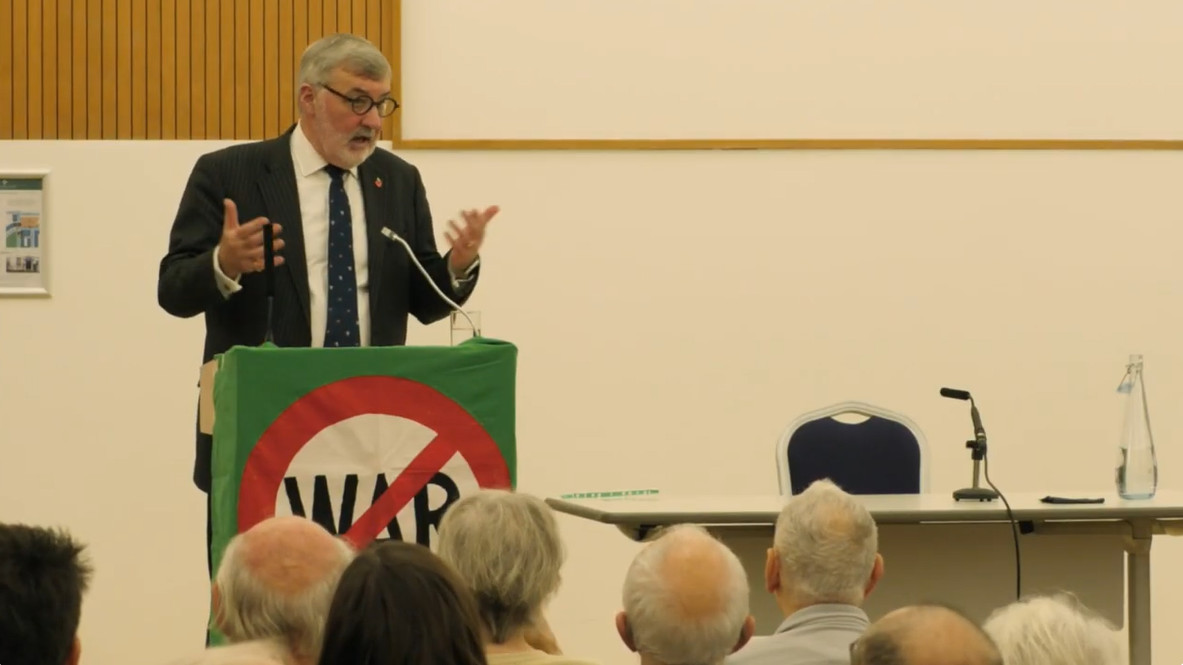
Lord John Alderdice, founding director of the Centre for the Resolution of Intractable Conflict, based in Oxford, gave the MAW 2025 Remembrance Lecture to a packed hall in Hamilton House, London on 9th November, Remembrance Sunday. Drawing on his experience as the key figure in bringing the Belfast/Good Friday agreement to a successful conclusion and as a former consultant psychiatrist in psychotherapy, John speaks engagingly about the qualities needed in today’s world if we are to succeed in resolving and preventing conflict.
Is it possible that out of the immediate worldwide crises of war and climate catastrophe a new approach can be fashioned to deal with our deepest differences?
You can watch a video of the lecture here: https://youtu.be/fYvLAfjqBeU,
and the text is available to download as a pdf here: https://abolishwar.net/wp-content/uploads/ending_wars.pdf
A video of the Question and Answer session after the lecture is available here: https://youtu.be/b6lWrKYXoTg
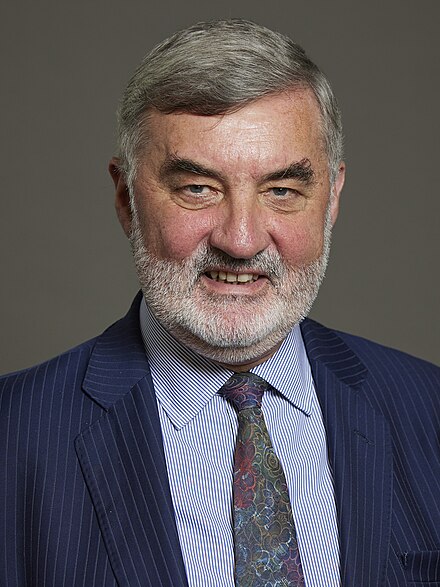
Lord Alderdice is Senior Research Fellow and Director, Centre for the Resolution of Intractable Conflict.
He is a psychiatrist by profession, but as Leader of the Alliance Party of Northern Ireland, he played a significant role in the negotiation of the 1998 Good Friday Agreement. He was the first Speaker of the new Northern Ireland Assembly and then a key figure in the normalization of security at the end of the conflict. He has held many international positions including as President of Liberal International, the global network of more than 100 liberal political parties (now Presidente D’Honneur).
He is the Director of the Centre for the Resolution of Intractable Conflict and Emeritus Chairman of the Centre for Democracy and Peace Building in Belfast. His work has been recognized with many honorary doctorates, fellowships and prizes.